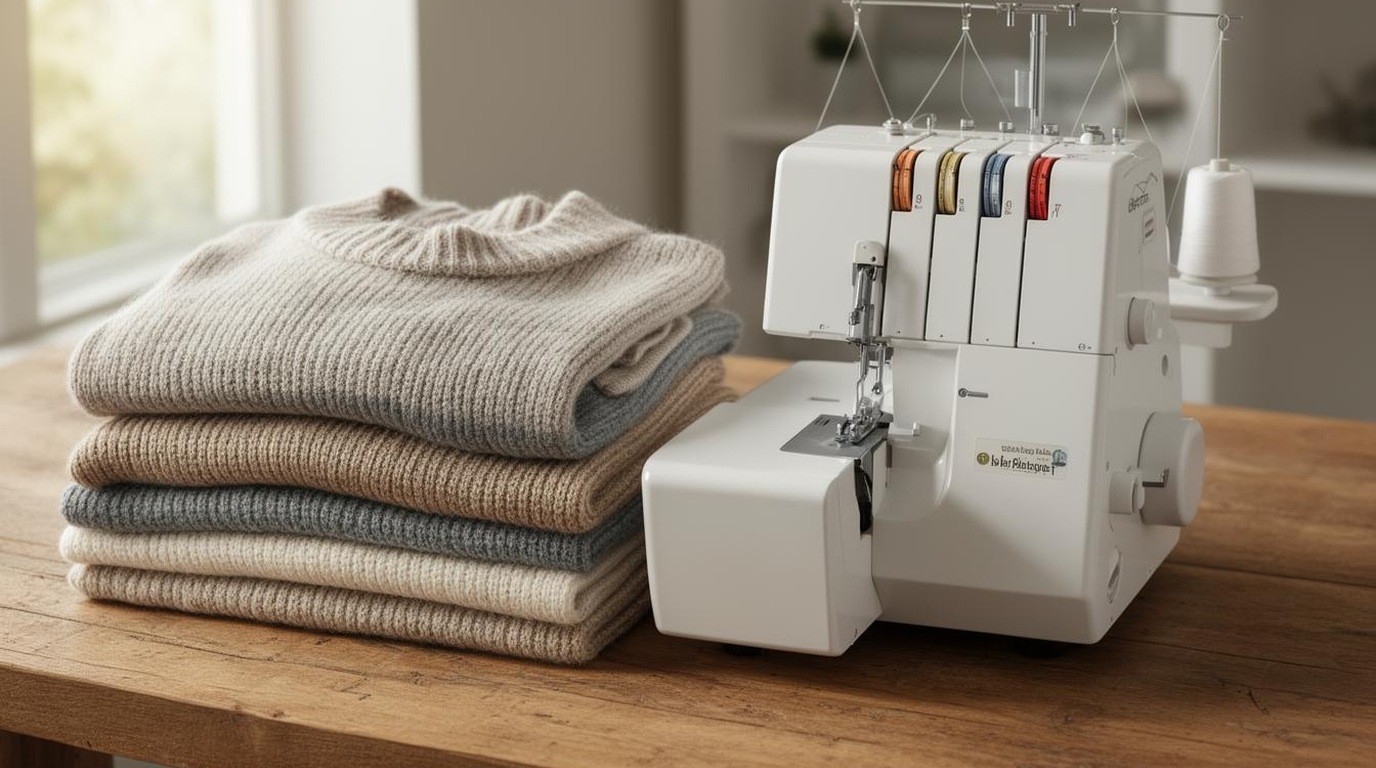
A serger, also called an overlock machine, makes a seam that trims and finishes the raw edge in a single pass. The result is neat, stretchy and quick, and it is a favorite among people who sew knits and garments often. A sewing machine does a different job. It makes a strong, precise seam and handles a wide range of tasks, from quilting to buttonholes. Choosing between them, or deciding whether you need both, depends on what you sew and how much time you spend on finishing.
This guide explains what a serger does, how it differs from a standard sewing machine, when it is worth buying and how to decide between a serger and a second machine. It describes general capabilities and does not recommend a specific model. Read the manual for any machine you buy, because threading and settings differ.
A sewist buys a serger for knits, then spends a week learning the threads and tension. The finished seams look neat, but the learning curve was longer than expected.
What a serger does
A serger uses several threads, usually three or four, and a set of loopers and knives to create an overlock stitch. The knives trim the fabric edge as the stitch forms, and the loopers wrap the thread around the edge to prevent fraying. The seam is quick to sew and produces a clean finish that stretches with the fabric.
Sergers are excellent for knits, jersey and stretch fabrics, because the seam can move with the garment. They are also useful for finishing the edges of woven fabrics, though a standard machine can do that job too with a zigzag stitch.

What a sewing machine does better
A standard sewing machine makes a lock stitch with a single top thread and a bobbin thread. It is the more versatile machine, handling straight seams, zigzags, buttonholes, topstitching and decorative work. It can also sew with a wide range of threads and fabrics, including heavy materials that a serger may struggle with.
For many home sewers, a sewing machine is the only machine they need. It covers most projects, and a zigzag stitch can finish raw edges well enough for everyday garments and household items.
When a serger is worth buying
A serger is worth considering if you sew knits often, make garments that need a stretchy seam or spend a lot of time finishing edges. It can save time on projects with many seams, and its clean finish gives garments a professional look. Sergers also make it easy to sew rolled hems on delicate fabrics.
If you only sew occasionally, or your projects are mainly woven fabrics and home decor, a serger may not justify its cost and space. It is also more demanding to thread and adjust than a standard machine, so plan to spend time learning its settings.
- Stretch seams on knits. Serger: Excellent. Sewing machine: Good with a stretch stitch.
- Edge finishing. Serger: Fast and neat. Sewing machine: Adequate with zigzag.
- Buttonholes. Serger: Not usually. Sewing machine: Yes.
- Quilting. Serger: Not usually. Sewing machine: Yes.
- Decorative stitches. Serger: Limited. Sewing machine: Often wide range.
Deciding between them
If you have only one machine, a sewing machine is the more flexible choice. If you already own a sewing machine and sew knits or garments regularly, a serger can be a valuable second machine. Some sewers keep both machines set up at once, so they can switch between seaming and finishing without changing threads.
Consider the space you have. A serger takes up room on the table, and it may need a dedicated area. Think about the storage and the time you will spend setting up and changing threads.
Learning curve and maintenance
Sergers have more threads and settings than a standard machine, and beginners often find threading and tension challenging at first. Practice on scrap fabric, and keep the instruction manual nearby. Clean the lint from the loopers and knives regularly, since build-up affects the stitch quality. Change the knife when it becomes dull, and follow the manual for replacement.
Take care with the knives, which are sharp. Keep fingers away from the cutting area when the machine is running, and unplug it before cleaning or changing parts.
Our guide to sewing machine features explained covers the core controls of a standard machine, which can help you decide what the serger should add to your setup.
Thread costs and tension
A serger uses thread more quickly than a standard machine, since each seam draws on several spools at once. Buy thread in sensible sizes, and check that the colors match the projects you plan. Learning tension takes practice. Loose loops or flat seams usually signal a tension issue, and small adjustments on each dial can correct them. Keep a notebook of your settings for each fabric, which saves time later.
Rolled hems
A serger can produce a rolled hem on lightweight fabrics such as chiffon or silk. The machine wraps the edge with thread, creating a narrow, neat finish. Use a fine needle and a light thread, and practice on scrap fabric first. A rolled hem takes time to master, but it gives a delicate finish that is hard to achieve with a standard machine.
Putting it together
A serger finishes edges quickly and gives stretchy, neat seams on knits and garments, while a sewing machine is the versatile choice for almost every other task. Buy a serger when you sew knits or finish many edges and already own a standard machine. Choose a sewing machine first if you need one machine that does everything. Practice threading on scrap fabric and keep the knives clean and sharp, and the right tool will make your sewing faster and more pleasant.
Learning a serger
- Practice threading on scrap fabric before a real project.
- Keep a notebook of tension settings for each fabric.
- Clean the loopers and knives regularly to keep the stitch clean.