
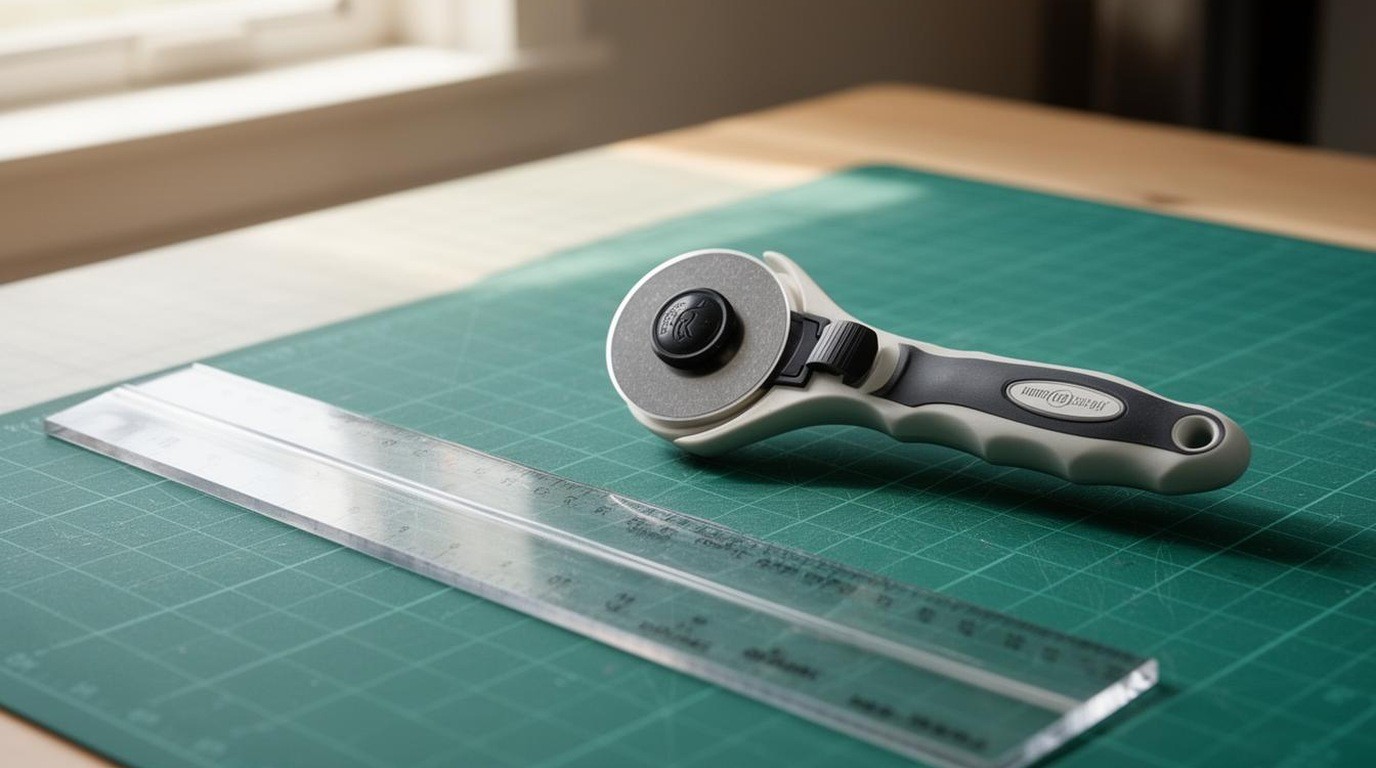
Quilting has a reputation for being expensive, and the reputation is partly deserved. Shelves of specialty tools tempt beginners with gadgets for every step, from cutting to basting to binding. Most quilters, though, rely on a small core of reliable supplies that do the important work well. A budget approach focuses on those essentials, buys quality where it matters and avoids the extras that look useful but rarely get used.
This guide covers the core tools for quilting on a budget: rotary cutters, cutting mats and rulers, along with the practical considerations that keep them safe and accurate. It describes general features and does not recommend specific brands. Quilting involves sharp tools, so the safety points below deserve a read before you start cutting.
Short answer: a basic quilting kit needs a rotary cutter, a cutting mat and a clear ruler. Close the blade guard when you set the cutter down, cut away from your body and replace dull blades.
The rotary cutter
A rotary cutter is a round blade on a handle, and it cuts through several layers of fabric at once. It is faster and more accurate than scissors for straight strips and squares. Choose a cutter with a comfortable grip and a blade that is easy to replace. A standard blade size suits most projects, and a larger blade can help with thick layers.
Safety matters with a rotary cutter. Always close the blade guard when you set the cutter down, keep fingers away from the blade path and cut away from your body. Replace the blade when it starts to drag or skip, since a dull blade can slip and cause injury. Store the cutter where children cannot reach it.
Cutting mats
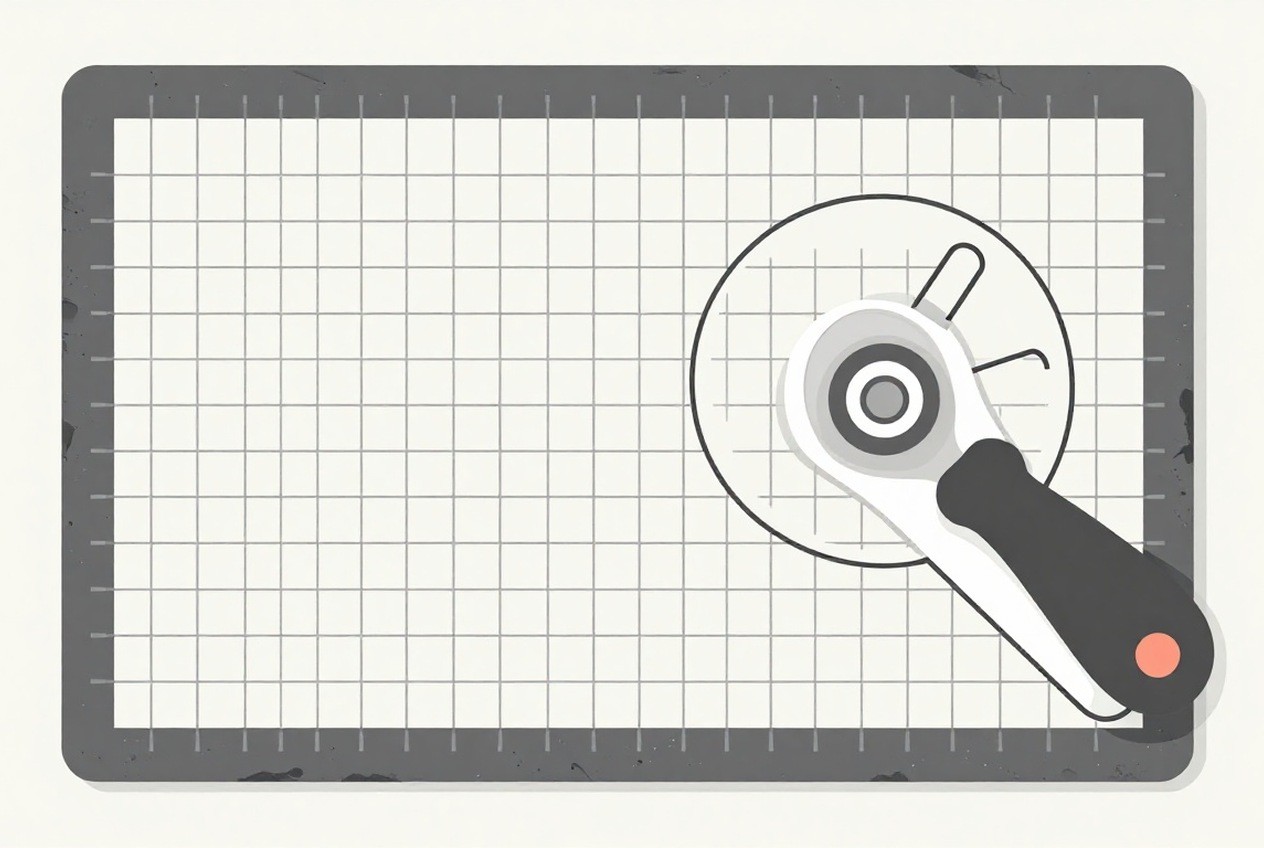
A cutting mat protects the table and gives the blade a surface to cut against. Mats are made from self-healing material, and a good one resists grooves for a long time. Choose a size that fits your work area, and look for printed grid lines that help you line up strips. A mat that is too small will make you reposition the fabric constantly, which slows the work and can lead to inaccurate cuts.
Keep the mat flat and away from heat. A warped mat makes it harder to cut straight lines. Clean it gently with a mild cleaner and let it dry before storing.
Rulers
A clear acrylic ruler lets you see the fabric beneath the markings, which helps you align strips and squares accurately. Look for a ruler with clear, legible measurements and a non-slip edge that stays in place under the cutter. A long ruler is useful for strips, while a smaller square ruler suits blocks and corners.
Check the measurements before you buy. Rulers should have markings that are easy to read, and a ruler with a thick edge can make the cutter ride up. Test the ruler with the cutter before committing.
| Tool | What it does | Budget tip |
|---|---|---|
| Rotary cutter | Cuts strips and shapes | Replace blades rather than buying a new cutter |
| Cutting mat | Protects surfaces and guides cuts | A medium size often covers most projects |
| Acrylic ruler | Measures and aligns fabric | One long and one square ruler is enough to start |
| Scissors | Trims threads and small areas | A dedicated pair for fabric keeps them sharp |
Thread, pins and needles
Thread and needles are easy to overlook but essential for good results. Use a cotton or cotton-blend thread for piecing, since it suits most quilting fabrics and presses well. Choose a size 70 or 80 needle for piecing, and replace it regularly. A new needle can make a noticeable difference in seam accuracy.
Pins and clips hold layers together. Glass-head pins are easy to see and handle, and clips can hold a seam without distorting the fabric. Buy in sensible quantities, and check that the pins are not bent before you use them.
Pressing and an iron
Pressing is part of quilting, and a steady iron makes the work accurate. Use a press cloth or a clean cotton cloth when you press delicate fabrics, and press seams rather than ironing them back and forth, which can stretch the fabric. Keep the iron away from exposed cords, and turn it off when you leave the room.
Plan the budget
Start with the rotary cutter, a mat and a ruler, then add thread, needles and pins. Buy extras only when a project calls for them. Look for starter kits, which bundle the basics at a reasonable price, though check that the included tools are good quality. Replace worn blades and needles instead of buying duplicates of tools you already own.
Our guide to choosing a first sewing machine covers the machine that pairs with these supplies, and craft gifts for adults explains how to choose a quilting starter set as a present.
Batting and backing
Batting is the layer between the quilt top and the backing. Choose a batting that suits the purpose of the quilt: a thin, flat batting for a wall hanging, or a thicker, loftier one for a warm throw. Cotton batting drapes softly and can be quilted closely, while polyester batting resists shifting and washes well. Buy backing fabric that is slightly larger than the top, so you have room to square the quilt.
Thread for quilting
Quilting thread holds the layers together and adds texture. A cotton or polyester thread in a neutral color is a safe choice for beginners. Use a slightly heavier thread for hand quilting, and test the tension on a practice sandwich before starting. A consistent stitch length makes the quilting look even, and a longer stitch can add a more casual look.
The short version
A budget quilter needs a rotary cutter, a mat, a ruler and a steady supply of good needles and thread. Respect the blade: close the guard, cut away from your body and replace dull blades. Choose a mat and ruler that suit your space and projects, and add extras only when a project needs them. Good basics make accurate piecing easier, and that is the foundation of any quilt you will want to keep.
Takeaways
- A rotary cutter, mat and ruler cover the basics.
- Replace blades rather than buying duplicate cutters.
- Choose cotton thread for piecing and test your needles.
Looking for a machine for quilting? Our guide to choosing a first sewing machine explains the choices.


