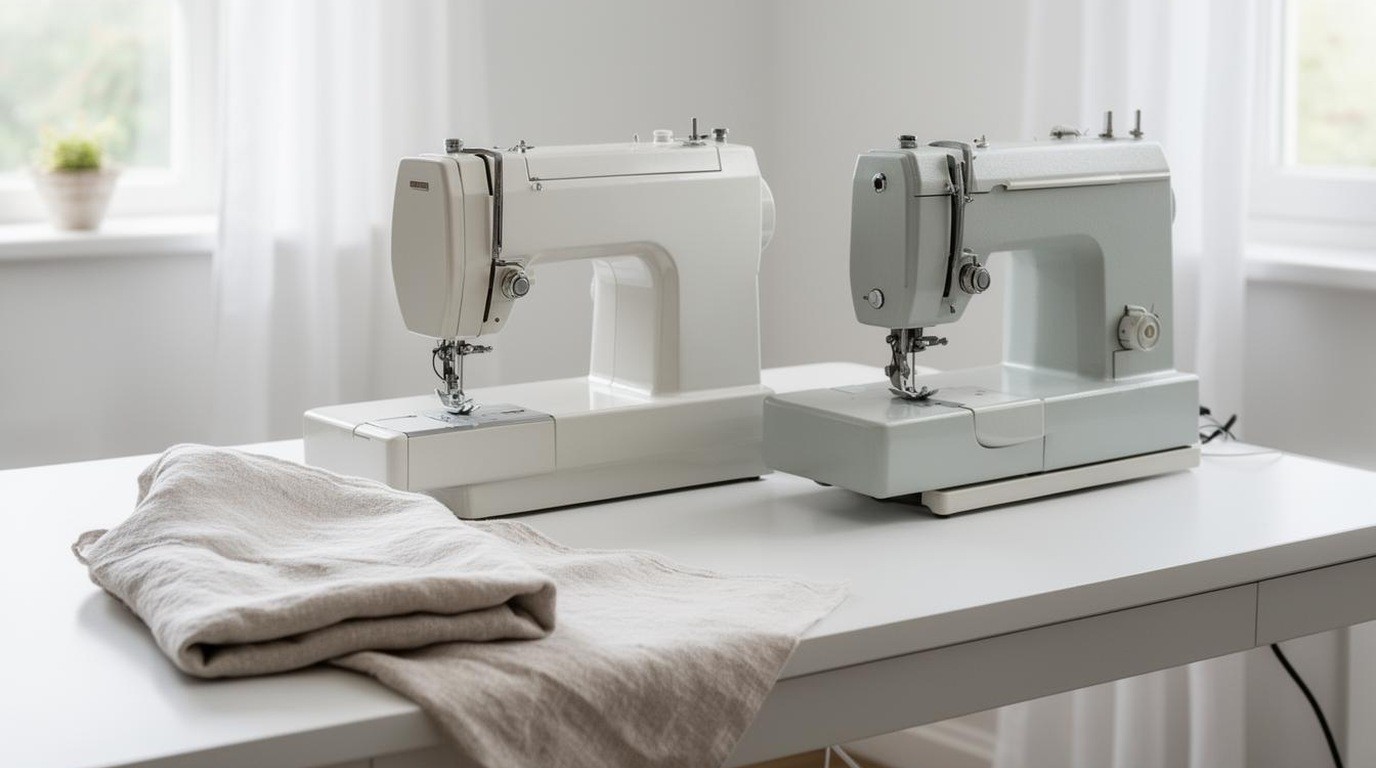
A first sewing machine should be easy to learn on, reliable for the projects you want to try and affordable enough that you will not feel guilty when it sits unused for a week. The decision often comes down to two broad types: a mechanical machine, which uses dials and levers to set stitches and tension, and a computerized machine, which uses buttons, a screen and built-in programs. Each type can produce excellent results, and each suits a different kind of learner.
This guide compares mechanical and computerized machines, explains how their controls differ and offers a way to decide which type fits your goals. It describes general characteristics and does not recommend a specific model. Try a machine in person if you can, and bring fabric samples so you can test the stitches for yourself.
Read this if you are choosing your first sewing machine and want to know whether mechanical or computerized suits you. You can skip it if you already own a machine that you use comfortably.
What a mechanical machine offers
A mechanical machine is simple, with a dial for stitch selection and a few levers for length, width and tension. Its controls are visible and direct, which helps beginners understand what is happening when they change a setting. Mechanical machines are often lighter, easier to repair and less likely to fail because of electronics.
The limitations are fewer stitch options and fewer automatic features. A mechanical machine may not offer one-step buttonholes or a wide range of decorative stitches. For many beginners, that is an advantage, since the basic stitches can be mastered before moving on to more advanced techniques.
What a computerized machine offers
A computerized machine uses a microprocessor and a screen or buttons to control the stitches. It typically offers a large number of stitch patterns, automatic buttonholes, needle threading, automatic tension and programs that adjust settings for different fabrics. For learners who want to explore quickly, these features can be a real help, and they can save time on projects.
The trade-offs are cost, complexity and the dependence on electronics. A computerized machine may be more expensive and harder to repair, and some features may be hard to understand at first. If the screen fails or a setting is hidden in a menu, the machine can feel frustrating to use.

Which type suits you
Think about how you want to learn. If you enjoy understanding each setting and building skill from the basics, a mechanical machine can be an excellent teacher. If you want to try many stitches and automatic features without spending hours reading the manual, a computerized machine may suit you better.
Consider the projects you plan to start with. For hemming, mending and simple garments, both types will work well. For buttonholes on many garments or for decorative quilting, a computerized machine can make the work faster, though a mechanical machine can do both with patience.
- Learning. Mechanical: Visible controls, direct feedback. Computerized: Many features, menus to learn.
- Stitch options. Mechanical: Basic to moderate. Computerized: Wide range.
- Buttonholes. Mechanical: Manual or semi-automatic. Computerized: Often automatic.
- Repair. Mechanical: Usually simpler. Computerized: Depends on electronics.
- Price. Mechanical: Often lower. Computerized: Often higher.
Test the machine before you buy
Bring a few fabric samples, including a cotton, a knit and a heavier fabric such as denim. Sew a straight seam, a zigzag and a buttonhole on each. Check whether the machine feeds the fabric evenly, whether the stitches are balanced on both sides and whether the noise and vibration are comfortable. A machine that feels stable and quiet will be easier to use for long sessions.
Ask about the warranty, the service network and whether the seller offers lessons or a demonstration. A machine that is well supported is easier to live with, especially when a problem appears on a deadline.
Budget for accessories
The machine is only the start. Plan for a few essential accessories, such as a set of needles, a seam ripper, a measuring tape, a pair of sharp scissors and a supply of thread. A walking foot or a zipper foot may be useful later. Factor these into your budget, so that the machine does not sit idle while you wait for the basics.
Our guide to sewing machine features explained describes the controls you will find on either type, and quilting supplies on a budget covers the tools for a project that needs more accessories.
Warranty and service support
A warranty protects you from early failure, and a good service network makes repairs quicker. Ask how long the warranty lasts, what it covers and whether you need to register the machine. Check whether a local shop can service the brand, since a machine that must be shipped away may be out of use for weeks. A dealer who offers classes or a support line can make learning easier.
Secondhand machines
A secondhand machine can offer good value, but it needs careful checking. Test every stitch, the buttonholes and the reverse. Look for smooth operation and listen for grinding or rattling. Ask whether the machine has been serviced and whether it comes with the original accessories. A machine with a warranty or a return policy from a dealer is safer than a private sale with no guarantee.
The short version
Mechanical machines are simple, visible and often easier to repair, while computerized machines offer many features and automatic functions at a higher cost. Choose by how you like to learn and the projects you plan to start. Test the machine with real fabric, check the warranty and support and budget for the accessories you will need. The best first machine is the one you will want to sit down at again next week.
First machine questions
Is a computerized machine too complicated?
It has more features and menus, which can take time to learn. A mechanical machine may suit a beginner who wants direct controls.
Should I buy secondhand?
A secondhand machine can be good value if it is tested carefully and comes from a dealer with a return policy.
How important is the warranty?
A warranty protects against early failure, and local service makes repairs faster.